
\n

\n \n

\n
\n

Engine calculator

\n

Use this form to work out your engine's specifications.

\n \n \n \n \n \n \n
\n \n \n \n \n \n \n \n \n \n \n \n \n \n \n \n \n \n \n \n \n \n \n \n \n \n \n \n \n \n \n \n \n \n \n \n \n \n \n
ItemMMInchesValue
Cylinder bore
Crankshaft stroke
Deck Height
Combustion chamber volume (cc)
Compression ratio
Number of cylinders
Total displacement:
\n \n \n \n \n \n \n \n \n \n \n
Solve for:
\n
\n

The compression ratio is an important parameter for air-cooled VW engines, because it has a significant impact on the engine's performance and reliability.

\n

The compression ratio compares the volume of the combustion chamber when the piston is at Top Dead Centre (TDC) with the volume when the piston is at Bottom Dead Centre (BDC).

\n

The higher the ratio, the higher the compression, which can improve the engine's power and efficiency, but also makes it more prone to knocking and overheating.

\n

On air-cooled VW engines, a high compression ratio can increase performance, but it also raises the temperature in the combustion chamber, which can cause premature wear of parts such as cylinder heads and pistons.

\n

Excessive compression also increases the risk of knocking, which can damage engine components. A well-balanced compression ratio is therefore essential to get the most performance while keeping an air-cooled VW engine durable and reliable.

\n

This is why owners of air-cooled VW engines must take the compression ratio into account when building or modifying their engine.

\n

The recommended compression ratio for air-cooled VW engines depends on several factors: how the engine is used, the cylinder head specifications, fuel quality, ignition set-up, and so on.

\n

For most four-cylinder air-cooled VW engines, however, the recommended compression ratio is generally between 7.5:1 and 8.5:1.

\n

This gives a good balance between power and engine durability. Too high a compression ratio can cause knocking (detonation), high combustion temperatures and engine failure. Too low a ratio causes a loss of power and an inefficient engine.

\n

Bear in mind that the choice of compression ratio depends on the specific configuration of the engine and can vary considerably with the components and modifications fitted. We recommend consulting a professional for specific advice on your air-cooled VW engine.

\n
\n \n \n
\n

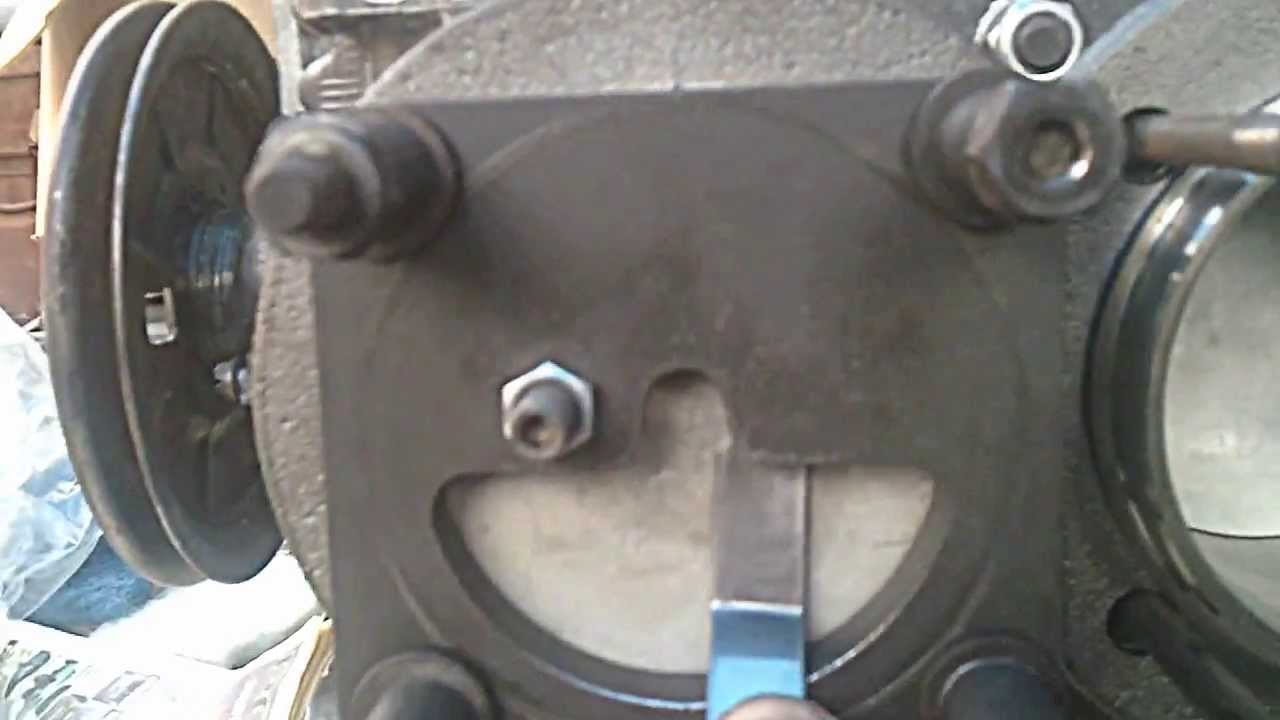
What is deck height and how do you measure it?

\n
\n Measuring deck height \n Deck height measurement comparison \n
\n

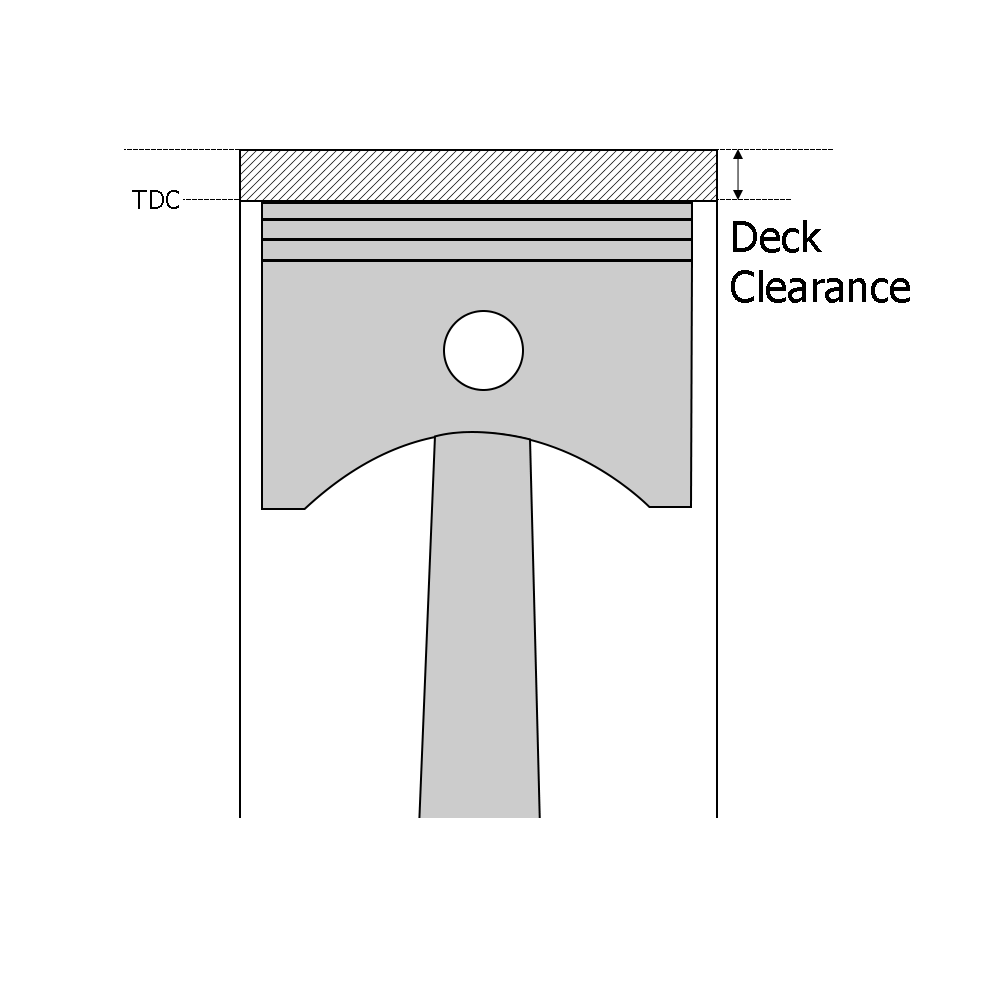
Deck height is the distance between the top edge of the cylinder and the top of the piston at Top Dead Centre (TDC). On air-cooled Volkswagen engines this measurement is taken without the cylinder heads, since there is no conventional head gasket. It is essential for working out the compression ratio and avoiding any contact between piston and head.

\n \n

How to measure the combustion chamber volume?

\n
\n Measuring the combustion chamber volume \n
\n

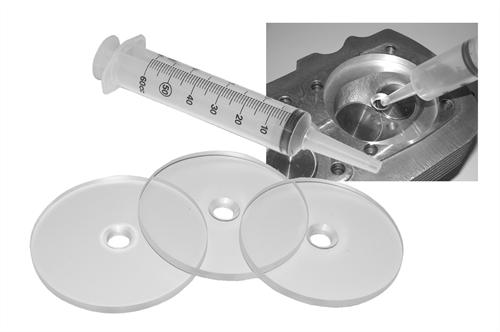
To measure the combustion chamber volume of a Volkswagen cylinder head, use a drilled plexiglass disc and a graduated burette. Fill the chamber with a liquid (light oil or coloured water) right to the top, removing any air bubbles, to obtain the exact volume in cm³.

\n \n

How to calculate the volume above the piston?

\n
\n Measuring the volume above the piston \n
\n

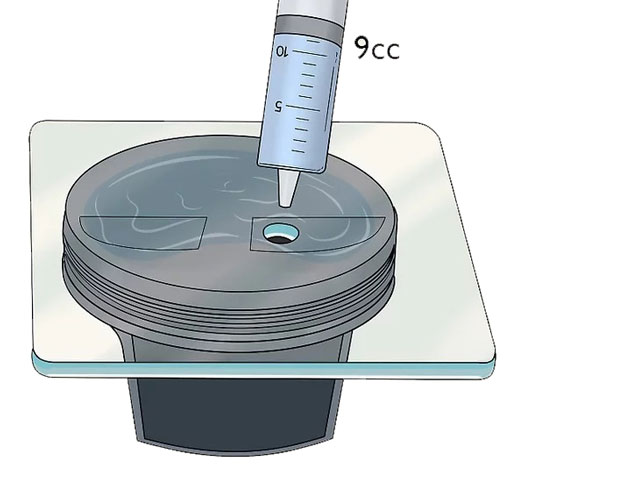
To calculate the volume remaining above the piston (dish or specific recess), bring the piston to Top Dead Centre, then fill using the same method (plexiglass and burette) up to the top of the cylinder. This volume is added to the final calculation of the total chamber volume to determine the compression ratio.

\n
\n
Rédigé par Atelier Dream Machine
  • Publié le 24 septembre 2026

Ce guide répond à 3 questions fréquentes.